
Deploying Agentic AI Workflow Automation represents the most transformative operational upgrade for enterprise software architectures in 2026. Organizations are rapidly moving beyond simple conversational chatbots to deploy goal-driven autonomous AI agents capable of dynamic planning, real-time tool discovery, and closed-loop execution across complex cloud environments.
Building production-ready agentic AI workflow automation systems requires moving away from static prompt chains. By equipping autonomous models with reliable function calling, stateful memory blocks, and self-healing error recovery, engineering teams can automate complex business operations with total reliability and deterministic control.
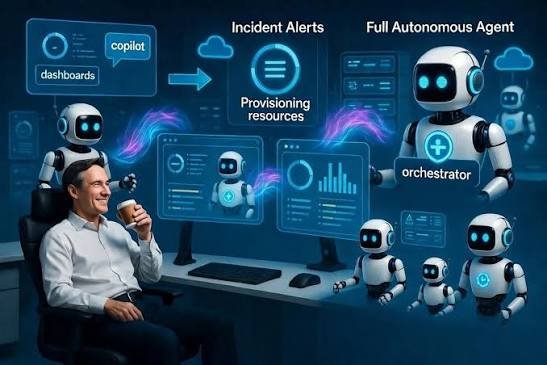
Traditional legacy integrations rely on rigid API scripts that fail when unexpected data formats occur. In contrast, modern agentic AI workflow automation platforms evaluate unstructured payloads, construct multi-step execution plans dynamically, select optimal external tools, and validate structural compliance before committing changes to core databases.
Industry Benchmark: Enterprises adopting agentic AI workflow automation achieve a 64% reduction in manual transaction processing times and a 48% increase in operational throughput compared to traditional Robotic Process Automation (RPA).
Core Architectural Pillars of Agentic AI Workflow Automation
While legacy software automation breaks down when encountering minor exceptions, modern agentic AI workflow automation systems rely on four fundamental technical capabilities:
- Autonomous Task Deconstruction: The central reasoning engine decomposes broad business directives into atomic, step-by-step execution sub-tasks.
- Structured Tool Invocation: Agents convert user intents into strictly typed JSON schemas to invoke external REST APIs, SQL databases, and SaaS microservices.
- Self-Healing Reflection Loops: When an API call fails, the system inspects raw stack traces, updates its internal reasoning state, and executes alternative fallback tools.
- Long-Term Execution Context: Persistent vector indexes and state stores preserve conversation history across long-running background tasks.
To see how agentic execution aligns with enterprise architectures, explore our engineering guides on Enterprise RAG Architecture, AI Agent Governance and Security, Enterprise UI/UX Design, Autonomous AI Infrastructure, Multi-Agent AI Systems Enterprise Architecture, and Multi-Agent Orchestration Protocols. You can also review open protocol documentation on Model Context Protocol Standards.
Scale Agentic AI Workflow Automation with Devanum
Our AI platform engineers design scalable agentic AI workflow automation engines, tool brokers, and secure execution pipelines tailored for enterprise systems.
Schedule AI Engineering Review →Top 5 Tool-Use Patterns in Agentic AI Workflow Automation
Successfully scaling agentic AI workflow automation requires deploying structured design patterns that govern how AI models interact with internal tools:
1. ReAct (Reasoning & Acting) Design Pattern
The ReAct framework forces the AI agent to explicitly articulate its reasoning thought process before invoking external tools. This transparent decision step makes debugging straightforward and ensures audit trails capture why a specific function was executed.
2. Plan-and-Execute Decomposition Pattern
To execute long-horizon enterprise workflows without losing context, the system splits planning from execution. A primary orchestrator creates a static execution plan, while modular sub-agents process individual steps in isolation.
3. Tool Registry with OpenAPI Validation
Rather than hardcoding integrations, agentic AI workflow automation platforms connect to central tool brokers using OpenAPI schemas. The broker validates all parameters before transmitting data to target endpoints.
4. Parallel Tool Calling Pipelines
Modern models analyze dependencies across execution plans to run non-interdependent tool calls concurrently. This parallel execution model dramatically minimizes latency in complex data aggregation tasks.
5. Human-in-the-Loop Approval Gateways
High-risk operational steps—such as triggering financial transactions or modifying security settings—pause automatically to request human authorization before resuming the workflow.
Comparison: RPA vs. Agentic AI Workflow Automation
Comparing legacy process automation against modern agentic AI workflow automation demonstrates why enterprises are upgrading their technical stack:
| System Dimension | Legacy Process Automation (RPA) | Agentic AI Workflow Automation |
|---|---|---|
| Data Processing | Requires rigid, structured inputs | Processes unstructured text, documents, & audio |
| Exception Handling | Breaks on minor UI or API changes | Self-corrects, adjusts parameters, & uses fallbacks |
| Plan Generation | Hardcoded, static step sequences | Generates dynamic plans tailored to specific goals |
| Tool Integration | Custom connectors for every single tool | Dynamically discovers tools via OpenAPI/MCP schemas |
| System Maintenance | High ongoing maintenance overhead | Self-adapting workflows reduce code updates |
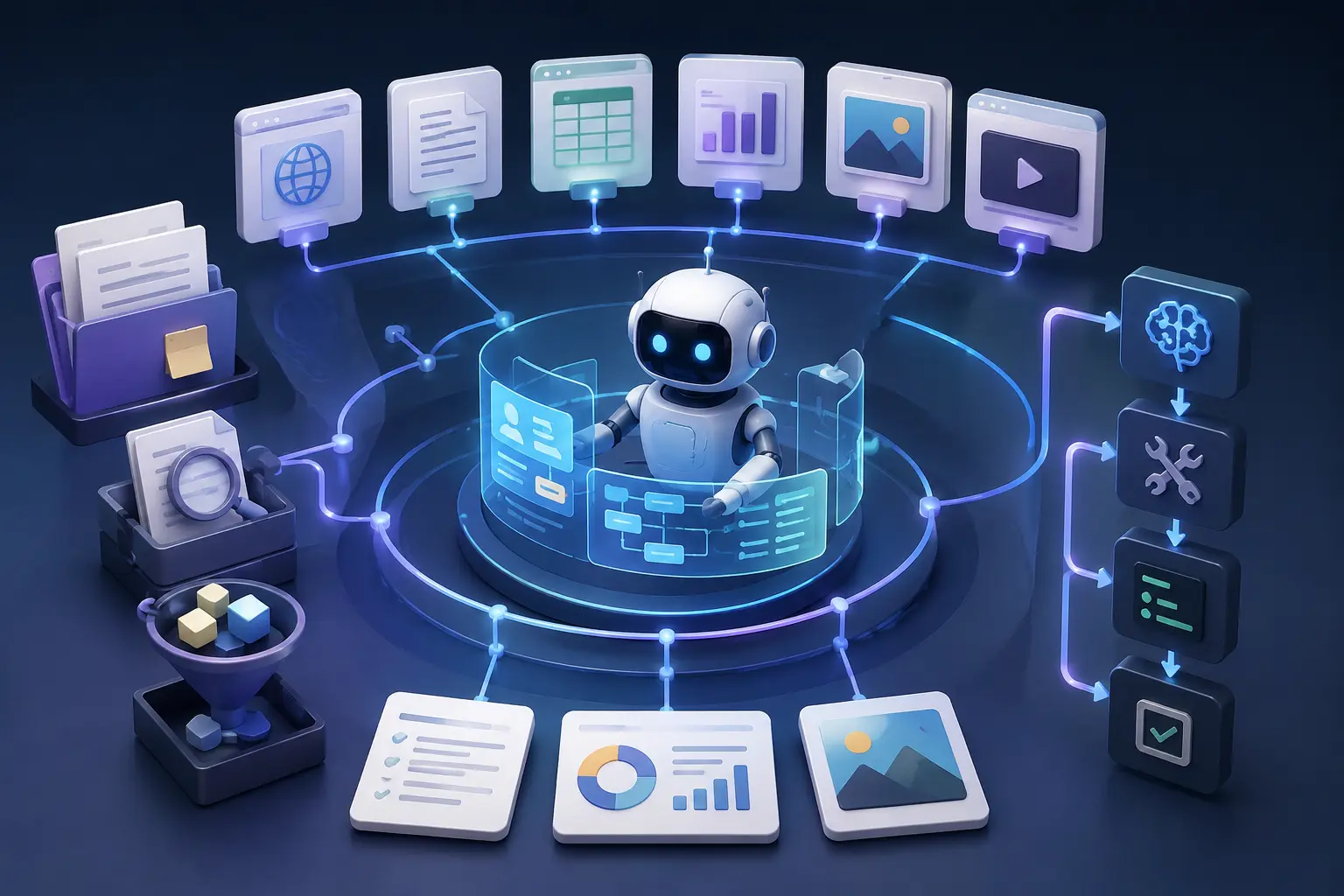
Preventing Failures in Agentic AI Workflow Automation
Deploying autonomous agents without strict execution boundaries risks creating infinite API loops or runaway cloud costs.
Key guardrails for production agentic AI workflow automation include:
- Maximum Step Limits: Enforcing strict iteration caps to stop agents that fail to reach task completion.
- Schema Middleware Filters: Validating function parameters against strict Pydantic schemas before executing API calls.
- Idempotency Token Tracking: Assigning unique identifiers to outgoing requests to prevent duplicate transactions during automatic retries.
Function Calling Schema Example in Agentic AI Workflow Automation
Enforcing explicit JSON schemas ensures that agentic AI workflow automation engines run reliably across production infrastructure:
{
  "name": "execute_database_query",
  "description": "Runs a validated read-only SQL query against the enterprise data warehouse.",
  "parameters": {
    "type": "object",
    "properties": {
      "database_name": {
        "type": "string",
        "description": "Target database identifier"
      },
      "query_string": {
        "type": "string",
        "description": "SQL SELECT statement to be executed"
      },
      "timeout_seconds": {
        "type": "integer",
        "default": 30
      }
    },
    "required": ["database_name", "query_string"]
  }
}
Structured function definitions prevent invalid parameter injections, improve system observability, and ensure security proxy layers can inspect payload contents in real-time.
Frequently Asked Questions About Agentic AI Workflow Automation
What is Agentic AI Workflow Automation?
Agentic AI workflow automation uses autonomous AI agents equipped with reasoning capabilities, tool-calling interfaces, and persistent memory to plan and execute multi-step operational tasks without manual scripting.
How does agentic AI workflow automation differ from traditional AI chatbots?
While traditional chatbots only generate text responses to user queries, agentic AI workflow automation systems actively take actions—invoking APIs, updating databases, and executing complex workflows independently.
Can agentic AI workflow automation connect to legacy enterprise software?
Yes. By utilizing API wrappers, database connectors, or standards like the Model Context Protocol (MCP), agentic workflows can interface smoothly with legacy ERPs, CRMs, and internal systems.
Future Outlook for Enterprise Automation
Implementing agentic AI workflow automation enables enterprise software engineering teams to build resilient, self-adapting platforms capable of executing complex business processes efficiently. By combining structured function calling, self-healing error recovery, and robust safety guardrails, organizations can scale operational throughput effectively in 2026 and beyond.