
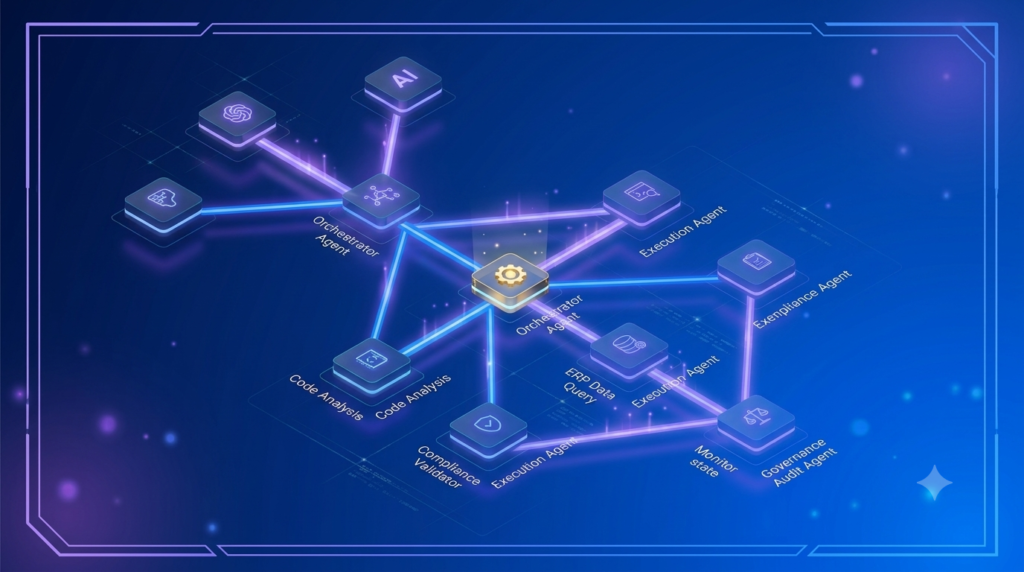
Modern enterprise software systems often fail not due to a deficiency in features, but because of cognitive overload and systemic interface friction. In an era dominated by complex multi-agent AI systems and multi-layered cloud data pipelines, high-performance UI/UX design is no longer just a visual preference—it is a core engineering leverage point that dictates operational throughput and platform adoption.
Interface friction compounds silently across enterprise organizations. Every unnecessary interaction step, delayed component state, unhandled API latency, or ambiguous navigation element steadily degrades team velocity. When scaling enterprise SaaS platforms or internal multi-agent AI orchestration tools, structural UI friction directly translates to operator fatigue, inflated onboarding costs, and execution errors.

To eliminate this operational tax, modern software architecture must evolve beyond static layout paradigms toward task-oriented, intelligent user journeys. Designing for high-intent workflows requires building digital products that actively anticipate user actions, surface contextual data dynamically, and minimize manual context switching across disparate systems.
Key Performance Indicator: Implementing robust multi-agent AI platforms reduces interface friction by 20%, driving a compound increase of up to 35% in cross-functional engineering velocity.
The Anatomy of Multi-Agent AI Systems in Enterprise Friction
Enterprise application environments are fundamentally different from consumer software. Operators spend consecutive hours managing high-density information, multi-step validation checks, and complex data streams. When these interfaces lack intentional visual hierarchy, users expend significant cognitive energy simply trying to parse the UI.
Structural friction usually originates at the architectural level. Legacy web applications rely on fragmented component libraries, unstandardized API response states, and deep modal dialogs that disrupt user focus. Over time, these minor design deficiencies aggregate into substantial organizational bottlenecks.
Furthermore, the integration of multi-agent AI agents into internal workflows has introduced a new layer of user experience challenges. Without real-time deterministic feedback, users remain unsure whether background agentic processes are executing, stalled, or requiring human-in-the-loop intervention. Learn more about W3C web interface accessibility standards to ensure seamless accessibility.
Solving interface friction requires a holistic engineering approach. By synchronizing front-end UI architecture with underlying backend microservices, development teams can build zero-latency digital experiences that feel instantaneous, intuitive, and reliable under heavy enterprise loads.
Ready to Build Your Multi-Agent AI Architecture?
Schedule a direct architecture review with our principal engineers to evaluate your technical roadmap and system integration requirements.
Core Principles of Engineering Multi-Agent AI Workflows
Achieving true UI performance demands strict adherence to modern design and front-end engineering principles. Below are the core pillars required to build scalable multi-agent AI enterprise interfaces:
- Predictive Navigation & Intent Prefetching: Utilizing predictive routing algorithms in multi-agent AI frameworks to load secondary views before explicit user interactions occur.
- Cognitive Load Reduction via Progressive Disclosure: Presenting complex enterprise data sets in structured, expandable layers so operators interact only with relevant touchpoints.
- Deterministic State Feedback for AI Workflows: Delivering instant visual state confirmation, optimistic UI updates, and live progress indicators during asynchronous background tasks.
- Standardized Component Libraries & Tokens: Establishing tokenized design systems that guarantee visual consistency across web, mobile, and administration dashboards.
When these core engineering principles are executed simultaneously, digital platforms achieve a seamless balance between computational speed and cognitive usability.
Architectural Shift: Modern enterprise telemetry has transitioned to measuring Time-to-Intent-Resolution (TTIR) across high-scale multi-agent AI deployments.
Legacy Design vs. Devanum Multi-Agent AI UX Architecture
Shifting to modern software delivery requires leaving behind bloated monolithic paradigms in favor of high-speed, modular component structures:
| Architectural Dimension | Legacy Enterprise Systems | Devanum Frictionless UX |
|---|---|---|
| Data Density Management | Overloaded tables with hidden, complex controls | Progressive disclosure & adaptive data views |
| Interaction Velocity | Multiple modal jumps & full page reloads | Instant optimistic UI state updates |
| System Integration | Siloed tools requiring constant context switching | Unified workspace with embedded multi-agent AI workflows |
| Design Scalability | Inconsistent, hardcoded front-end components | Tokenized, cross-platform Design Systems |

Optimizing Front-End Frameworks for Zero-Latency Rendering
Front-end architecture directly influences interface responsiveness. Traditional monolithic applications frequently suffer from excessive bundle sizes, render-blocking scripts, and redundant re-render cycles that degrade performance over time.
Leveraging modern component architectures, such as server-driven UI engines and micro-frontends, allows engineering teams to deploy independent application modules without compromising global style consistency or bundle efficiency. For industry insights on scalable AI paradigms, refer to OpenAI’s official research publications.
Furthermore, adopting efficient state management strategies ensures that UI state mutations execute without causing expensive DOM recalculations. Instantaneous visual updates preserve the illusion of zero latency, keeping users in an uninterrupted workflow.
Asset loading strategies must also be optimized for enterprise networks. Utilizing edge CDN distribution, aggressive asset caching, and next-generation image formats ensures rapid rendering even under constrained network conditions.
Measuring UX Impact on Business Intelligence and Retention
The business impact of frictionless software engineering is directly reflected in core operational metrics. Organizations that prioritize human-centered software design experience accelerated onboarding cycles, reduced support ticketing, and higher daily active usage.
- Accelerated Onboarding: Intuitive software interfaces reduce training overhead from weeks to days, allowing new team members to reach full productivity rapidly.
- Enhanced System Observability: Intuitive management dashboards tracking infrastructure health, token consumption, and model performance give leadership real-time operational clarity.
- Lowered Human Error Rates: Standardized UI components with clear field validations and explicit confirmation modals prevent high-risk operational mistakes in mission-critical environments.
When strategic UI/UX design aligns seamlessly with scalable backend architecture, multi-agent AI enterprise digital platforms do not merely look refined—they execute faster, scale effortlessly, and unlock sustainable long-term business value.